

At a time when everyone googles everything, from the nearest bakery to a mechanic who works after 4 PM, being visible online has become a condition for survival. Especially if you run a local business. And if you’re one of those businesses, meaning you operate locally, then local SEO is perfect for you. So what is local SEO (and why does it concern you)?
Local SEO is all those online actions that help people from your city find you more easily when they search for a product or service you offer.
And by that, we don’t mean big campaigns or expensive ads. You just need to show up where people are already looking for you.
If someone googles "hairdresser Osijek", Google doesn’t look for the best hairdresser in the world, but the one who is closest, has good reviews, accurate opening hours, and a clearly stated location.
When it comes to local SEO, you don’t have to be the biggest, the most well-known, or the most expensive - you just need to be present and visible.
Local SEO helps even if you don’t have a website (although you really should have one). If you have a location, working hours, a phone number, and customers looking for you, that’s already enough to get started. Local SEO connects the physical world (your shop, service, workshop, salon, bakery...) with the digital world (Google searches, maps, reviews).
And your customers are real people, all of them searching for "dentist near me" or “where can I fix my washing machine”.
If they don’t find you, they’ll go to someone else - someone who took those few small steps and is showing up. That’s why you need local SEO.
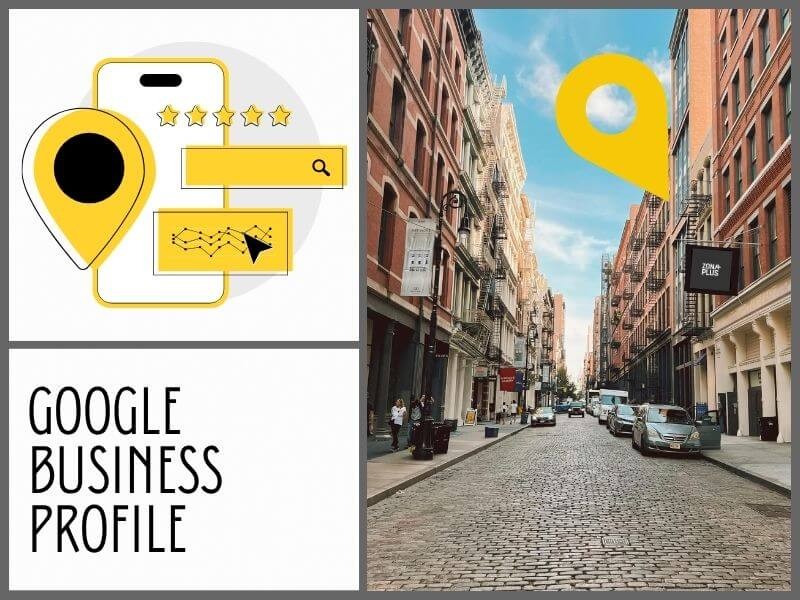
If you do only one thing after reading this, let it be opening (or updating) your Google Business Profile.
It’s that box that shows up on the right when you search for a company: it displays the name, address, location on the map, phone number, business hours, reviews, photos, and more. That profile is what Google uses to decide who appears at the top of local searches.
If you don’t have one, you practically don’t exist on the map. And if you do have one, but it’s half-empty or contains incorrect info, someone else will steal your customer - even if they offer a worse service - simply because they’ve updated their profile.
Here’s how to open a Google Business profile:
And finally, confirm ownership. Google will send a code to the company email address you entered. When it arrives, enter the code and - you’re done.
Once you confirm ownership, you can edit all your details, respond to reviews, and see how many people have found your profile.
It sounds like a lot of steps, but it honestly takes about ten minutes. And in return, you get a tool that can decide whether a customer knocks on your door - or someone else’s.

People trust other people more than they trust ads. Especially when they’re in a hurry and need to make a quick decision. Reviews are the digital version of word-of-mouth recommendations. If someone reads that you’re friendly, fast, and fair, there’s a higher chance they’ll call you because of that.
Google also really likes reviews. The more positive (and genuine) reviews you have, the more Google pushes you toward the top of local search results. But it’s not just about the number - frequency (regular reviews), authenticity (not copied or generic text), and your response (especially to negative reviews) all matter.
Here’s what this can look like in practice:
- When someone compliments your service in person, say: “I’m glad you’re happy. If you have a minute, it would mean a lot to us if you could leave a Google review.”
- Send a message after completing a service with the review link and a short message thanking them and inviting them to share their experience.
- Create a QR code that leads to the reviews page and stick it on the counter, entrance, or inside the invoice.
How to get the review link?
Most important: don’t beg for praise. People like to help when they’re satisfied, but they don’t like pressure. Be sincere, ask when there’s a natural opportunity, and thank them when they leave a review - that counts more than you think.
When people search for a service, they rarely type just “shoemaker”. They’ll write “shoemaker Split” or even more specifically: “shoe repair Trstenik”. Why? Because they’re looking for something specific, nearby, and immediately available. No one is going to drive around town looking for a shoemaker.
These are local keywords - a combination of service and location. And those are exactly what help Google match supply with demand.
If you have a website, blog, Facebook page, Instagram profile, or even just a Google Business Profile, make use of that space. Include the name of the city, neighborhood, district, or well-known landmarks nearby: “near the market”, “by the hospital”, “close to the bus station”... People search using exactly those words.
Don’t write “best café in Croatia” because no one is searching for that. They’re looking for “cakes downtown Zadar” or “coffee to go Novi Zagreb”. Use the words you would type in if you were looking for that same service.
How to do that?
On the website - In titles and service descriptions, state exactly where you work.
Examples:
- Apartment cleaning Makarska
- BBQ catering for events in Pula and surroundings
- Carpentry Sesvete - custom closet design
On social media - Mention where you are, what you did today, and for whom.
Example: “Today we delivered to apartments in Lapad Bay. Thank you for your trust!”
Add location to the post - Google sees it, and your followers remember it.
In blogs - Write posts that help people in your region specifically.
Example: “5 things to know before choosing a dentist in Split” or “How to choose a hairdresser in Maksimir?”
On your Google profile - When posting updates or replying to reviews, mention your location.
Example: “Thanks to Mrs. Ana from Bili Brig for the lovely review - see you again!”
Why is this so important?
Because local keywords don’t exist just “for Google”. These are the words your future customers and clients are already using. You’re simply helping them reach you faster and more easily.
In short: let Google know where you are and who you’re talking to. There’s no need to “chase” all of Croatia. Focus on your neighborhood, city, or region - because that’s exactly where what you offer is being searched for.

A website isn’t just there to look pretty and be seen, it should work for you every day. If people visit your site and can’t immediately figure out where you are, what you do, and how to contact you, they’ll just move on. And very quickly.
You don’t need a website with ten menu items or a poetic “about us” section. You need a site where it’s clearly visible:
If your website is slow, looks outdated, or is unreadable on a mobile phone, it’s better not to have one at all, because nowadays that turns people away more than it helps. On the other hand, if you have a simple, fast, and clear website with basic information and a clearly stated call to action (“Call us”, “Send an inquiry”, “Let’s get started”), you’re already ahead of many others.
All you need is:
If you also have your own domain (e.g. www.zonaplus.hr), and the site loads quickly on mobile, Google will like you more. And people will take you more seriously.
Facebook and Instagram are not true SEO tools. But Google doesn’t ignore them. Quite the opposite.
Let’s say you’re a hair salon in Šibenik. You post a photo of a new haircut, tag the location “Šibenik - center” and write: “First haircut after the holidays - thanks for your patience!”
Google sees the location, sees the activity, links the profile with your business name, and “sends signals” that you’re an active business. And people who live a few streets away recognize that and click.
The same applies if you’re a mechanic, a bakery, a flower shop, or a plumber.
- Post a picture from your workshop, a clip of a finished cake, a bouquet ready for delivery, a “before-and-after” bathroom renovation - but always tag the location.
- Add a caption like: “Emergency job in Novi Zagreb. Customer happy, so are we.”
These kinds of posts build trust and increase your chances of showing up to someone else who’s searching for a service in that area.
And one more thing: link everything you can.
Google loves when things are connected, when everything points to the same name, the same location, and the same phone number. And your potential customers love it when they can quickly find you, see what you do and how you work, and know that there are real people behind the brand.
This is a small detail that causes many to lose visibility without even realizing what the problem is.
On Facebook you are “Bakery Sunce d.o.o.”, on your Google profile it says “Sunce Bakery”, and on your website just “Sunce”. And your phone number is different too...
Now imagine how that looks to Google - it doesn’t know if it’s the same company or three different ones. And what does it do?
It skips you.
Google doesn’t guess, it looks for consistency. And if the name, address, or phone number differ, it seems unreliable. The same goes for your customers. If they come across three different versions of the same thing, if there’s no consistency, trust disappears, or even worse, they might think you’re no longer in business.
In local SEO there is a rule called NAP:
Name - Address - Phone.
This means that the company name, address, and phone number must be the same on every platform where you exist:
If you’re not sure where your data appears, do a quick audit - google your business name and see where you’re listed. Correct all discrepancies.
Local SEO is like a physical store - you observe who comes in, what interests them, and why some return while others don’t. And you can track all of this online. If you have a Google Business profile, you already have access to simple statistics.
Check how many people found you, clicked on “Call”, “Directions”, or “Website”. These are concrete actions that show someone wasn’t just browsing but wanted to visit, call, or learn more.
If you also have a website, turn on Google Analytics - it’s completely free, and it’s enough to check:
If, for example, 70% of visitors come from Zadar, and you’re planning to expand your advertising to Split, stop and first focus on those who are already looking for you.
Likewise, if everyone clicks on the “Services” page but no one calls, maybe you need a clearer call to action or a better offer.
And the simplest indicator?
The phone ringing more often than before.
If people are calling with questions like “I saw you on Google”, “I found you on the map”, “you have great reviews” - that’s proof you’re on the right track.
Tracking results doesn’t have to be complicated. It’s enough to occasionally look at the numbers, notice patterns, and adjust what you’re doing based on that.

Your potential customers are literally around the corner. Maybe they’re sitting in a café two streets away, looking for someone who offers exactly what you do. But if they can’t find you online, they’ll go to someone they can.
With local SEO there are no shortcuts, no tricks. Just a set of small but smart actions that, when done consistently, bring the right people straight to you.
These are things like:
Together, these small details don’t attract “everyone from everywhere”, but precisely those closest to you - the ones who can and want to contact you right away.
If you’ve reached the end of this text, do at least one concrete thing today: open or update your Google Business profile. Check that all the data is correct. Add a new photo or two. Write a short post. That’s the start.
Because online visibility isn’t reserved for big companies. Quite the opposite. It’s most beneficial for those who work locally and are ready to take action.