
Starting a business requires many decisions, but very few people think about marketing at the beginning. There is no time, no budget, and “everything needs to be sorted out first.” Yet it is precisely at this stage that you create an impression that will follow you. If you do not know when to start, what to publish, and how people will even find out about you, you need a better plan.
If you are opening a trade or a company, you probably have a long list of things you need to take care of. The legal side, the space, registration, equipment, accounts.
And social media and marketing? They have not even come up yet. If they ever do.
Most people starting a new business share a similar attitude: “We will post once we start operating.” Or even more often: “We have Facebook and Instagram, but we have not posted anything yet.”
This is a common mistake.
Marketing does not come after opening. It comes before. Because if you open your doors and nobody knows you are there, who will you welcome?
Marketing starts before you open a company or a trade and before you even begin offering your products or services.
Creating social media profiles a few days before opening is not marketing. It is being late.
If your business is locally oriented (hair salon, car repair shop, restaurant, apartments), you need to build visibility at least a month earlier.
What usually happens is this: all your focus goes into arranging the space, purchasing equipment, and paperwork, while communication toward the “outside” only begins once you are ready to open the doors.
That sounds logical, but in reality you are starting from zero at the moment when you already need customers and clients.
People buy from those they know. And for that, they need to see you several times, hear about you, recognize your business, your name, or your face.
Without that, they do not search for you, do not follow you, and do not recommend you.
People like to know what is opening in their vicinity, so even before you start operating, you should introduce yourself to your audience through social media and a few simple local announcements.
This can be done a couple of months earlier. Basic information is enough.
In the first phase, it is important to have clearly defined foundations:
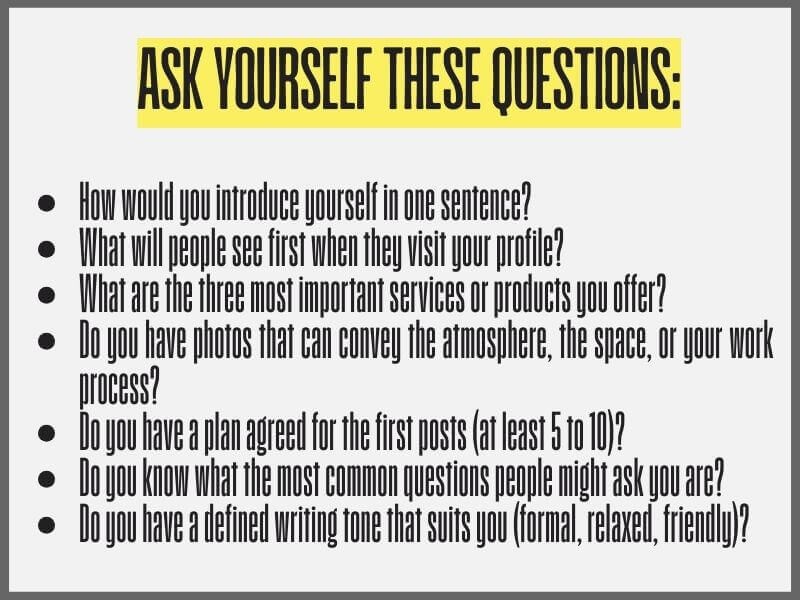
Before you write your first post, you need to think carefully about the foundations.
A social media profile is not an advertisement and it should not consist of occasional updates posted only when needed. It is a place where people most often come into contact with you for the first time and decide whether they will stay.
Ask yourself these questions:
Do not wait until opening day and then look for a photographer or think about what you could post on social media.
Profiles that start without a plan appear confused and unconvincing. People recognize improvisation. And they ignore it.
It is better to delay creating a profile than to start with unfinished descriptions, poor photos, and posts that say nothing to anyone.
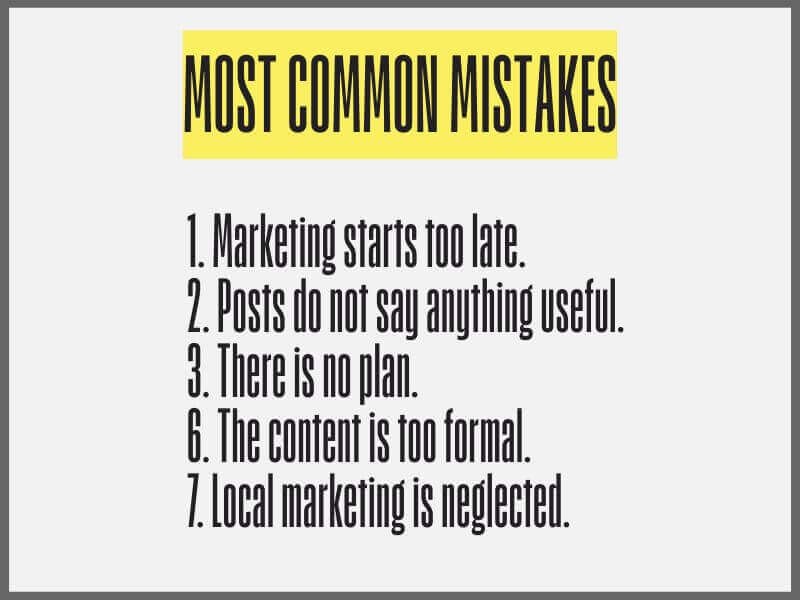
1. Marketing starts too late.
You create social media profiles only a few days before opening, without a content plan and without a target audience. At the moment when you need visibility the most, you are only beginning to build trust. Instead of people welcoming your opening with interest, most of them only hear about you once everything starts, and by then you are already behind.
2. Posts do not say anything useful.
They are often sentences like “opening soon” or “here we are.” There is no real information (who you are, what you are, and what you do), no value for the reader, and no reason for anyone to remember you. People want to know how you can help them, what you offer differently, and what the experience with you looks like. If you do not say it yourself, no one will guess.
3. There is no plan.
Posts are published spontaneously, depending on inspiration, without consistency and without a clear goal. This makes you look insecure and unprepared. A profile is not a hobby, it is the face of your business.
6. The content is too formal.
The communication sounds overly formal. There is no warmth, no personal tone, no clear message about who you are and who stands behind your business. And this is exactly what determines whether someone will choose you, especially if your business is locally oriented.
7. Local marketing is neglected.
No one in the neighborhood knows what you are opening. People walk past you, but have no idea when you are opening, what exactly you do, or why they should stop by. There are no flyers, no posts in social media groups, no cooperation with nearby businesses. And all of these are excellent opportunities to build a customer base.
Do not rely solely on online presence.
Many of your first customers and clients live nearby, but do not follow you on social media.
Therefore, combine it with local visibility:
All of this can be done without a large budget. What matters is having a clear message and a bit of initiative. People will know how to recognize the effort.
.jpg)
If you only post whatever comes to mind and whenever it comes to mind, and do not listen to who follows you and watches your posts, that is not marketing. Nor is it a conversation. It is one-way communication.
Social media is a place where you build trust. If there is no real person behind the business on the profile, people will not take it seriously. Even more importantly, they will not want to engage.
In the first weeks, you do not need a perfect feed. You need presence.
All of this gives profiles life.
Examples (that encourage conversation and involve the audience):
These posts are not trying to sell anything. They show that you are listening to your audience. And that is exactly what creates a sense of belonging and trust on the part of the audience. When people feel they are part of your story, they will remember you more easily and want to come.
Social media is a channel, not a solution. If you post a photo of your workspace without a description, with an unclear offer, or without a call to action, you will not receive any inquiries.
Social media does not sell by itself, the messages you send through it do. And those messages must have a purpose.
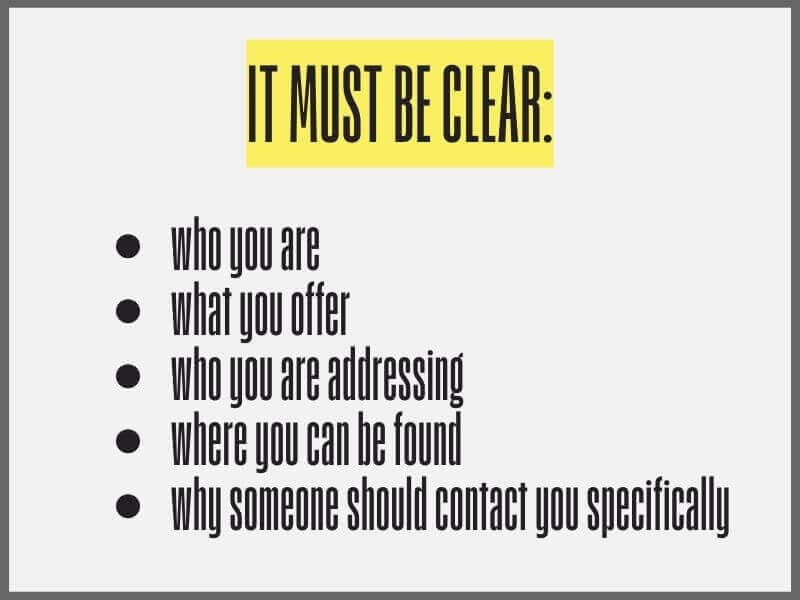
Your profile should work for you. This means it must be clear through your posts:
Social media works best when it is part of a broader marketing picture.
And what else belongs in that broader marketing picture?
If everything you have in terms of communication fits into “three Instagram posts,” then you do not have marketing. Marketing is what works. And for it to work, it must be broader than just the profile itself and must be directed toward the people you are addressing.
Marketing is everything you do so that people find out about you, understand what you offer, and want to try it.
It is not enough just to “be present.” The point is how you are present and what stays in the mind of the person who sees you, hears you, or reads something about you. Even if you have a social media profile, but you do not have a message, a strategy, and an offer, that is still not marketing.
Marketing starts with questions such as:
Marketing must be clear and consistent, and it also includes:
All of these are touchpoints with your future audience. Each of them can be a “first encounter” – and that is why what you communicate, how it looks, and where it appears matters.
Therefore, if you are planning to open a new business, ask yourself this question as well:
“If someone has never seen me or heard of me, how could they get to know me and what would my message be?”
Build a relationship before selling. Do not ask for a purchase or a reservation right away.
Let people first find out who you are, why you do what you do, what kind of experiences you offer, and what they can look forward to. When people feel that there is a real person behind a business profile (and social media is the best place for that), they will more easily remember your business and want to support you.
Tell your story and let people know about you even before they need you. Then, when they really do need something, you will be the first they think of.
And that is what good marketing does, without “convincing” anyone.
Are you starting a business and not sure where to begin with social media and marketing?
Get in touch with Zona plus – let us create a plan together that truly helps you attract your first clients.